October 21, 2025
Recently, a 16-member delegation of teachers and students led by Professor Dominique Moisl from the Department of Social Work at Fulda University of Applied Sciences in Germany visited our university, officially launching the two-week "Chinese Social Welfare and Social Work Study Camp" program. This program is funded by the Chinese Government Scholarship of the China Scholarship Council. It is co-hosted by the School of Law, Humanities and Social Sciences and the School of International Education of Wuhan University of Technology, and implemented by the Social Work teaching team of the Department of Sociology. The aim is to deepen the understanding and cooperation between China and Germany in the fields of social work and social welfare.
On October 10, the China-Germany Social Welfare and Social Work Study Camp opened successfully. Geng Yinggang, Secretary of the Party Committee of the School of Law, Humanities and Social Sciences, Shi Hu, Deputy Secretary of the Party Committee of the School of International Education, and Quan Zongtian, Vice Dean of the School of Marxism, attended the opening ceremony. Accompanied by student volunteers, the German visiting group visited the picturesque Jianhu Campus, the historically rich Mafangshan Campus, and the dynamic Nanhu Campus in turn. Along the way, teachers and students from the two universities had a cordial and pleasant exchange on the campus history, architectural features, and learning and living environment. The German teachers and students highly praised the beautiful natural scenery and strong academic atmosphere of our university, and stopped to take photos for memory many times.
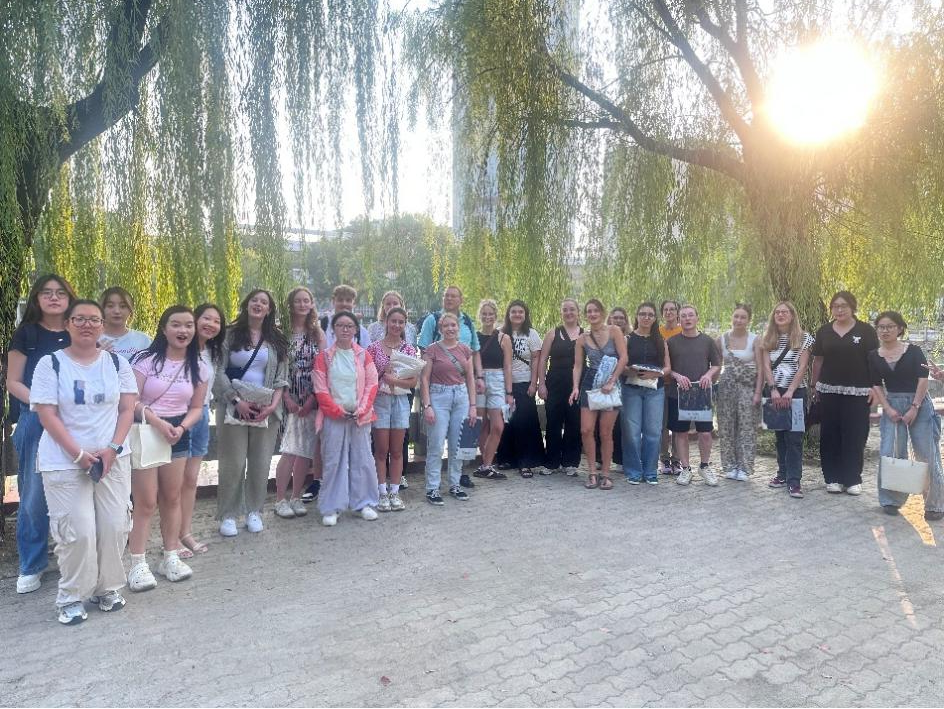
Figure 1 - Teachers and students of the Chinese and German Sociology Departments take a group photo in front of Jianhu Lake
During the visit, students from both sides conducted in-depth discussions on topics such as Sino-German social and cultural differences, social work practice models, and learning experiences of sociological theories. In a particularly warm moment, teachers and students served as “language teachers” for one anotherduring the walk. German students earnestly practiced Chinese greetings such as "Ni Hao (Hello)" and "Xie Xie (Thank you)", while Chinese students carefully imitated the basic pronunciation of German. Throughout the process, knowledge and emotions blended naturally in a relaxed atmosphere. This not only showcased the school-running characteristics of our university but also built a bridge of understanding and friendship beyond national borders among young people.
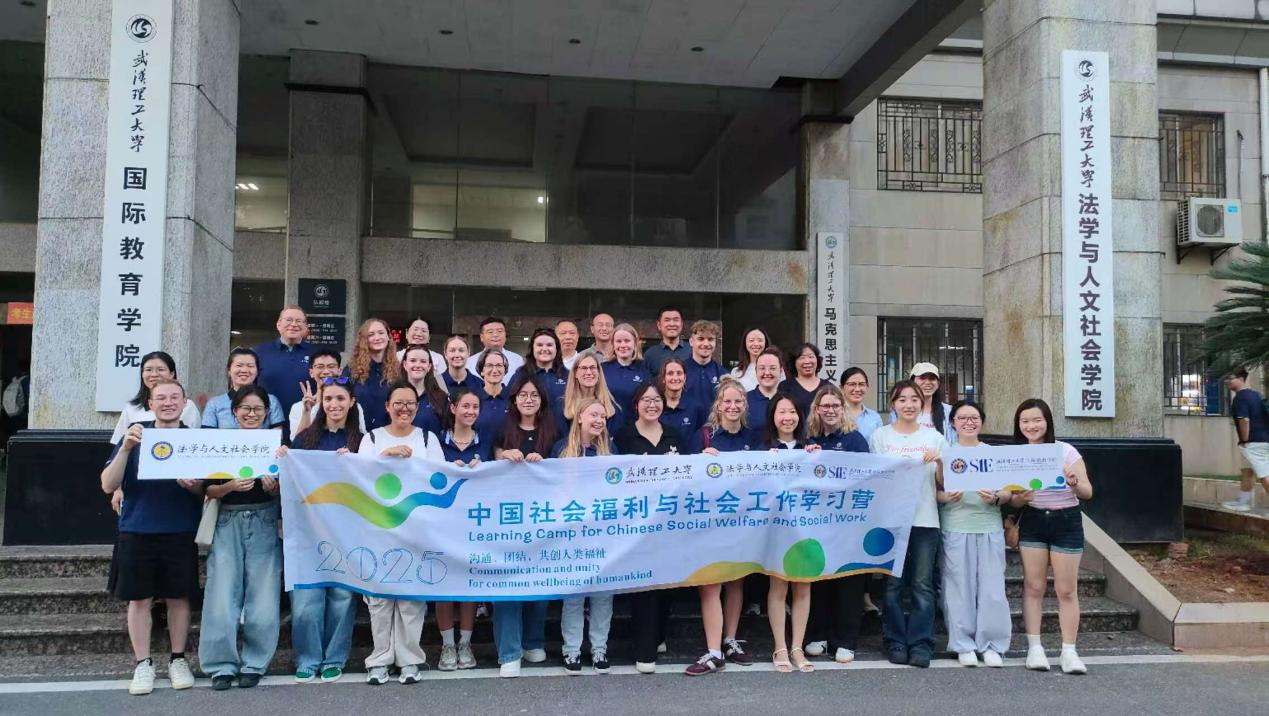
Figure 2 - Chinese and German teachers and students take a group photo in front of Hongyi Building
Subsequently, the activity entered a relaxed and pleasant session of exchanging cultural T-shirts. Teachers and students from both sides showed their cultural T-shirts representing their respective universities. The German cultural T-shirts were based on elegant gray, matched with vibrant green school emblems, demonstrating simplicity and elegance. The Chinese cultural T-shirts took bright blue as the main color, printed with unique school emblems, full of youthful vitality. Everyone communicated with each other holding this special "youth token", and the scene was full of enthusiasm and laughter. It was not only the integration of visual colors but also the collision of campus culture and youthful vitality, symbolizing the deepening of China-Germany friendship and diversified interactions.
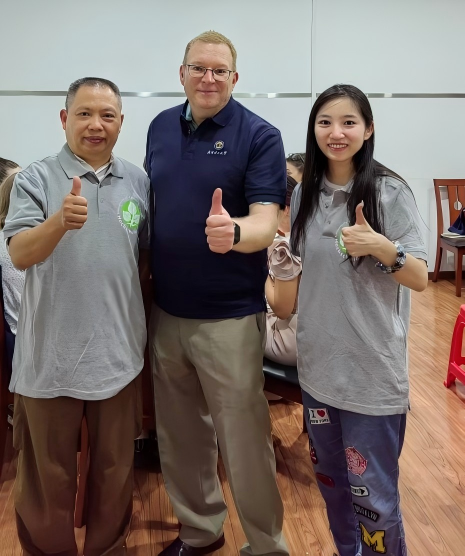
Figure 3 - Chinese and German teachers and students exchange cultural T-shirts
In the next two weeks, the study camp will be carried out around three aspects. The theoretical teaching will mainly discuss the development of Chinese social work, the characteristics of China's social welfare system, and how to develop social work practice and voluntary services. The social practice will be carried out in streets, grassroots communities, social welfare institutions, Union Hospital, and assistive device centers for the disabled to enable German students to deepen their understanding of Chinese social welfare and social work practice. The cultural exchange will help foreign students understand Chinese history, culture, and contemporary development through relevant courses and activities, and promote exchanges and mutual learning between different civilizations.
Correspondents: Chen Meihan, Yu Yanping
Edit:He Zhaorui
Audited by: Bu Qingping
School of Law,Humanities and Sociology, Wuhan University of Technology
Address: No. 165, Luoshi Road, Mafangshan Campus, Wuhan University of Technology East Courtyard 4 Teaching building
Copyright © 2024 School of Law, Wuhan University of Technology, All Rights Reserved


